Agafay Desert: the complete guide to visiting from Marrakech
A stone plateau forty minutes from the city, not a sea of sand. Here is what it is, what it is not, and how to make a day or a night of it worth the drive.
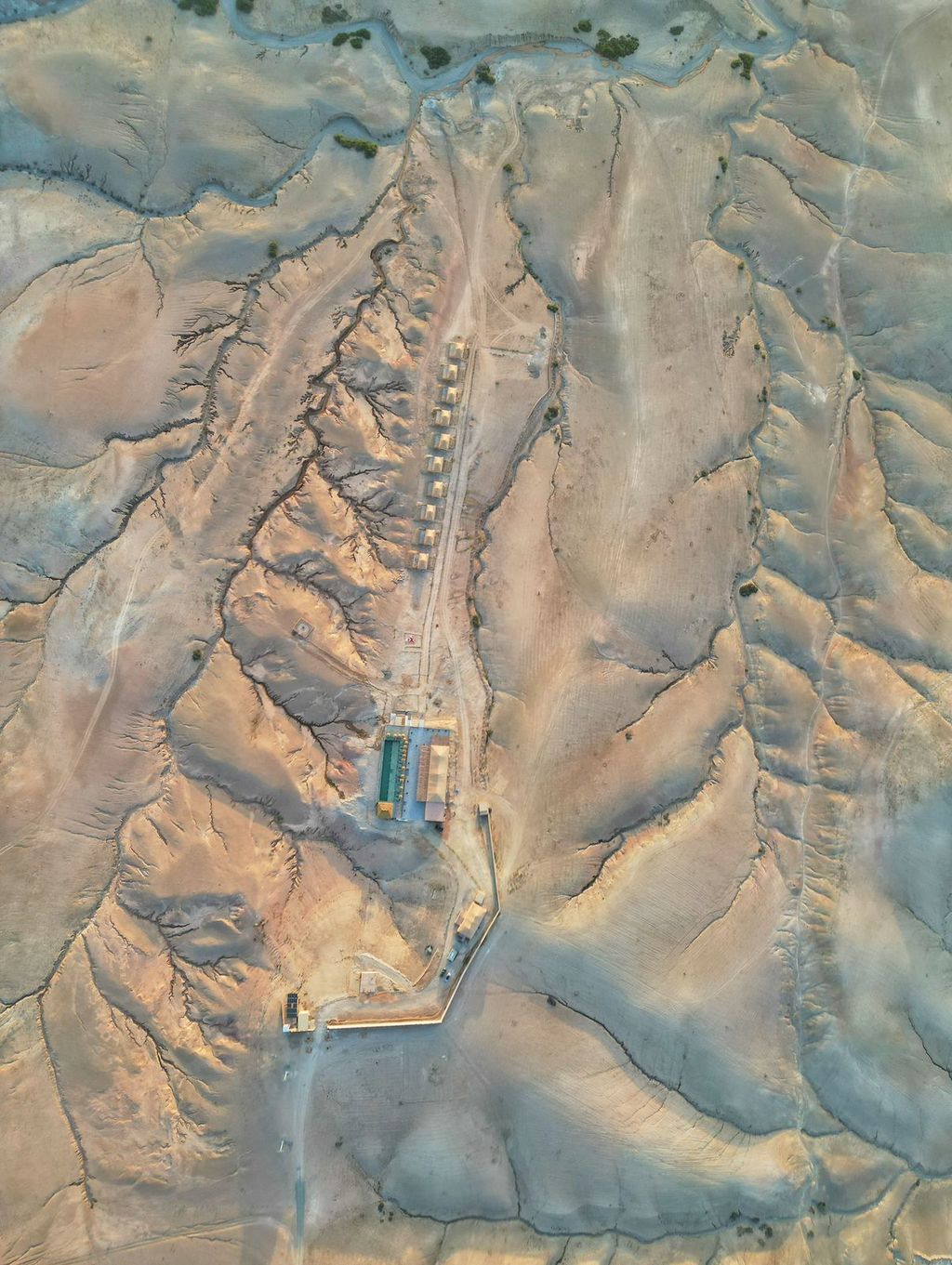
Most people hear "desert near Marrakech" and picture dunes. Agafay is not that, and the sooner you know it the more you will like the place. It is a stone plateau: dry, pale, cut by shallow canyons, with the High Atlas closing the horizon to the south. There is no sand out here, and there is no camel train disappearing over a crest into an orange sunset unless somebody arranged it for the photograph.
What Agafay does have is distance and quiet, thirty kilometres from a city of a million people. That is a rarer thing than dunes, and it is the reason the plateau has filled with camps over the past decade.
Where is the Agafay Desert?
Agafay lies south-west of Marrakech, roughly 30 kilometres from the medina, on the road towards Lalla Takerkoust and the foothills of the High Atlas. Administratively it is nobody in particular: a broad area of rocky ground between the last suburbs of Marrakech and the mountains, crossed by a few surfaced roads and a great many pistes.
The plateau sits at around 500 to 700 metres. That altitude matters more than it sounds: it is why the nights are cold even in July, and why the Atlas stays white on the skyline until late spring.

How far is Agafay from Marrakech?
Between 40 and 60 minutes by car from the centre, depending on where you start and on how long it takes to get out of the city. The distance is only about 30 kilometres. Traffic on the Marrakech side accounts for most of the journey time, which is why leaving at five on a Friday afternoon takes noticeably longer than leaving at ten on a Tuesday morning.
The road through Lalla Takerkoust is surfaced almost the whole way. The final approach to most camps is a piste, and that last stretch is the part nobody warns you about. It is perfectly fine in an ordinary car driven slowly. It is unpleasant if you go fast, and it is the reason most visitors book a car with a driver rather than take their own.
If you would rather not drive it yourself, we explain the options on our Marrakech to Agafay transfer page, including pick-up from a riad in the medina where no car can reach the door.
Is Agafay a real desert?
Geographically, yes: it is arid, sparsely vegetated and effectively uninhabited. It is a stone desert rather than a sand desert, which is the ordinary state of most of the world’s deserts. The Sahara you have in mind, all dunes and ridgelines, is called an erg, and ergs are the exception rather than the rule.
Whether Agafay counts as a "real desert" for your purposes depends on what you came for. If you want to walk barefoot over a dune at dawn, you will be disappointed, and we would rather tell you now than after you have paid. If you want silence, an enormous sky and mountains on the horizon within an hour of your hotel, Agafay does that better than anywhere else near Marrakech.
Agafay or the Sahara?
This is the decision worth making before any other, so here it is plainly.
| Agafay | Sahara (Merzouga, Zagora) | |
|---|---|---|
| Distance from Marrakech | About 30 km | 400 to 550 km |
| Travel time each way | 40 to 60 minutes | 7 to 9 hours |
| Realistic trip length | Half a day, or one night | Three days minimum |
| Landscape | Stone plateau, shallow canyons | Sand dunes, erg |
| Mountains on the horizon | Yes, the High Atlas | No |
If you have three days to spare and dunes are the point of the trip, go south. If you have one night, or one afternoon, Agafay is not a consolation prize: it is a different landscape that happens to be reachable.
What is there to do in Agafay?
Less than you might expect, and that is largely the point. The plateau is not an activity park. Most visitors do one thing in a day, usually at either end of it, and spend the rest of the time doing very little.
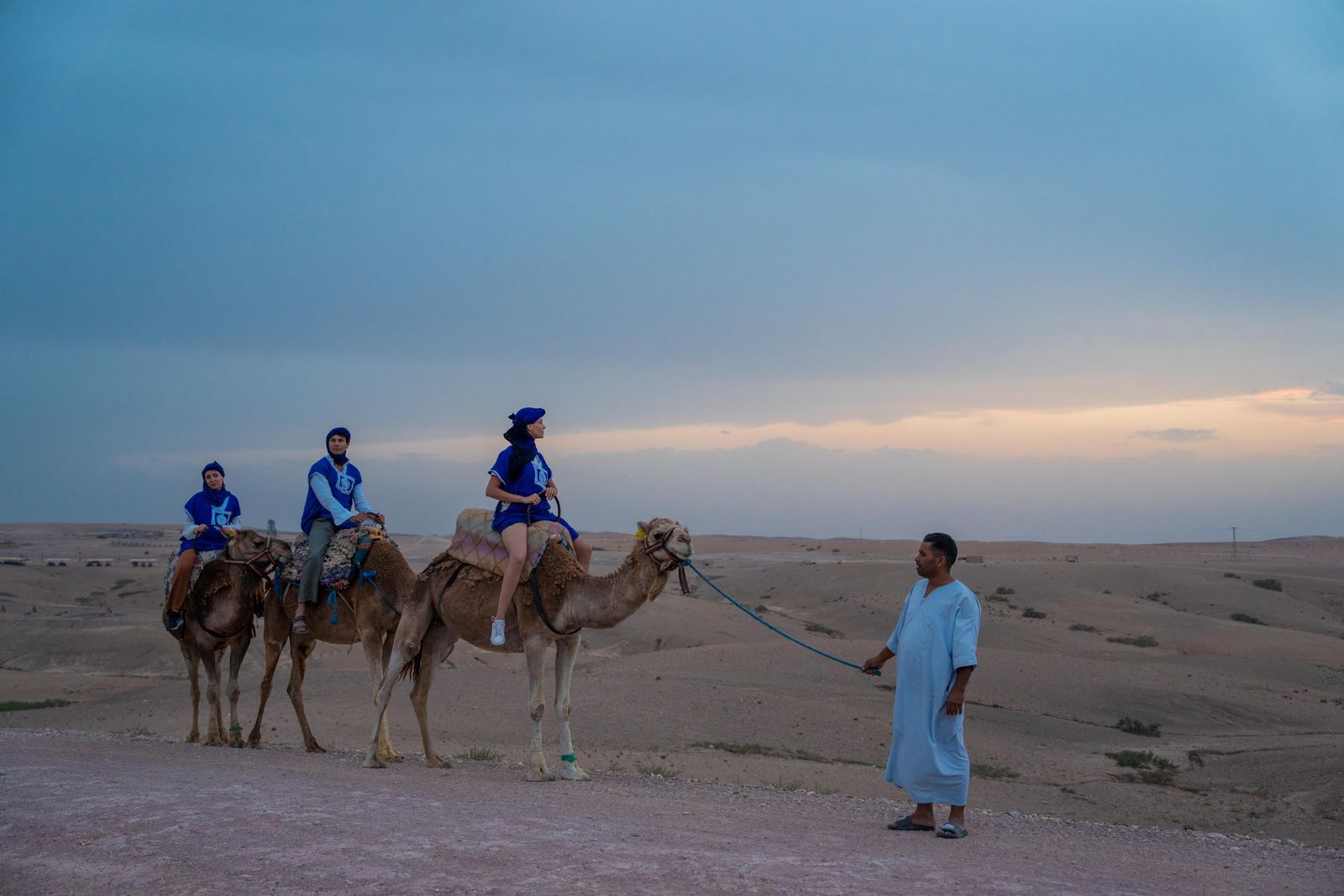
- Camel rides along the ridge above the canyons, best in the hour before sunset
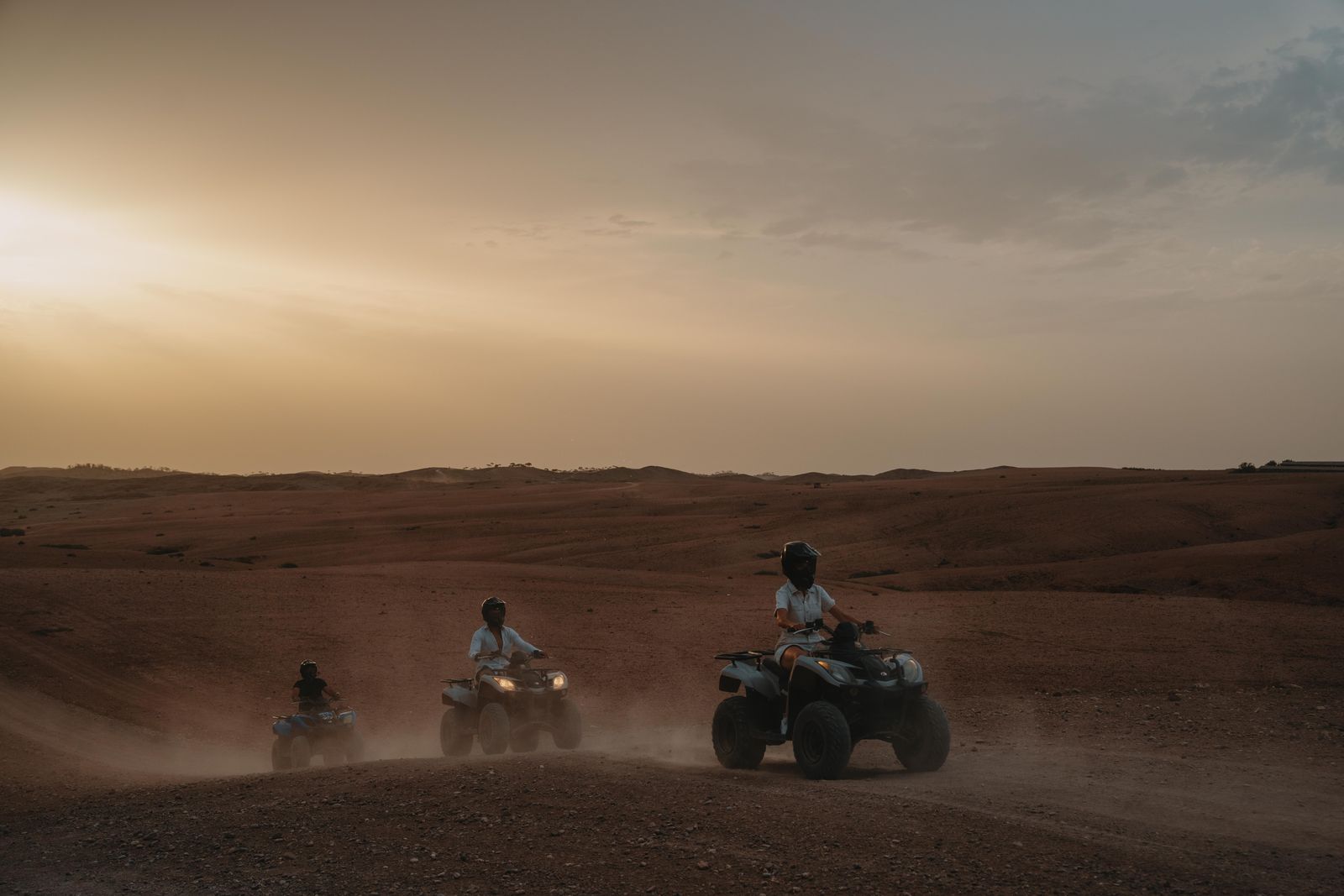
- Quad biking and buggies on the tracks east of the camps, better in the morning before the heat
- Horse riding along the canyon edge, for people who have ridden before
- A pool afternoon, which is what a good number of visitors actually come for in summer
- Dinner outside after dark, usually the part people remember
- A hot air balloon at dawn, which flies over the plain outside Marrakech rather than the plateau itself
Each of these is described in detail, with prices and the best time of day, on our Agafay desert activities page.
Day trip or overnight stay?
The honest answer is that a day trip shows you the landscape and a night shows you why people write about it. The two hours that make Agafay worth the drive are the one before dark and the one after first light, and a day pass ending at six in the evening misses both.
That said, an afternoon by the pool with lunch is a genuinely good use of a hot day in Marrakech, and it costs a fraction of a night. Both are legitimate; they are simply different things.
| Day Pass | Night Pass | Overnight | |
|---|---|---|---|
| Hours | 11am to 6pm | 2pm to 10pm | Afternoon to the following morning |
| Includes | Pool, terraces, lunch | Sunset, dinner, the night sky | Tent with private bathroom, breakfast |
| From | €49 per person | €69 per person | €200 per tent, B&B |
| Best for | A hot afternoon out of the city | Sunset and dinner without staying over | The two hours that matter |
The two passes are explained side by side on the Day Pass page, and the tent categories on the accommodation page.
Can you stay overnight in Agafay?
Yes, and it is the main reason to come. There are more than a dozen camps on the plateau, and they are not interchangeable. Some are built for couples and go quiet by eleven. Others bring musicians in every evening and suit a group of friends. A few sit far enough out that you cannot see another camp from your terrace, at the cost of twenty more minutes on a piste.
Tents in the camps we work with have a private bathroom with hot water, air conditioning and heating. That last point is not a detail: winter nights on the plateau can approach freezing, and a canvas tent without heating is a long night.
We describe the three tent categories, what changes between them and what does not, on the accommodation page.
When is the best time to visit Agafay?
| Season | What to expect |
|---|---|
| March to May | The best of the year. Warm days, cold nights, snow still on the Atlas, and green ground after rain |
| June to August | Hot in the middle of the day. Come for the evening, or spend the afternoon in the pool |
| September to November | The second best window. Clear light, comfortable temperatures, fewer people than spring |
| December to February | Bright mild days and genuinely cold nights. Quiet, and the Atlas is at its most striking |
Whatever the month, the temperature drops fast once the sun goes. People arrive in July in a t-shirt and spend dinner regretting it.
What to bring
- A jacket, in every season, without exception
- Closed shoes if you plan to ride a quad or a buggy; the ground is gravel
- Sun protection and a hat: the plateau is exposed and there is almost no shade
- A swimsuit if you are coming for the day or staying over
- Cash: payment is made on the day, to the driver, and there is no cash point on the plateau
- A phone charger, though electricity in the camps is usually solar with a generator behind it
How long should you stay?
One night is the right answer for most people. It covers sunset, dinner, the night sky and the following sunrise, which is everything the plateau has to offer. A second night is worth it if you want to do nothing at all, which is a real reason and a good one, but the landscape does not change.
If you only have an afternoon, take the Night Pass rather than the Day Pass. Arriving at two and leaving at ten gives you the hour that matters.
Practical notes worth knowing
- Camps are not signposted from the road, and the pistes look identical after dark
- Mobile coverage is patchy and wifi, where it exists, stops at the edge of the common area
- Alcohol is served at some camps and not at others; ask before you assume either way
- Children under three stay free at the camps we work with; above that, the rate depends on the camp
- Nothing is charged online. You pay in cash on the day, to the driver who brings you
Is Agafay worth visiting?
For the landscape, the light and the quiet, yes. For dunes, no, and no amount of photography on other people’s websites will change that. The visitors who enjoy Agafay most are the ones who arrive knowing what it is: a stone plateau with an enormous sky, close enough to Marrakech that you can be back in the medina for lunch the next day.
Frequently asked questions
How far is the Agafay Desert from Marrakech?
About 30 kilometres, which is 40 to 60 minutes by road depending on where you start. Getting out of Marrakech takes longer than the open road that follows.
Is Agafay a sandy desert?
No. It is a stone desert: a dry rocky plateau cut by shallow canyons. The nearest sand dunes are in the Sahara, seven to nine hours away by road.
Can you visit Agafay in a day?
Yes. A Day Pass runs from 11am to 6pm and covers the pool and lunch. A Night Pass runs from 2pm to 10pm and covers sunset and dinner, which is the better half of the day.
Do you need a 4x4 to reach Agafay?
No. The road is surfaced almost the whole way and the final piste is manageable in an ordinary car driven slowly. A vehicle with decent ground clearance makes that last stretch more comfortable.
What is the best month to visit Agafay?
April and October are the two most comfortable months. Winter is quiet and clear with cold nights; summer is hot at midday and best enjoyed early or late.
Is there anything to do in Agafay besides the camps?
Camel rides, quads, buggies and horse riding are arranged from the camps. Beyond that the plateau is empty, which is the reason most people come.